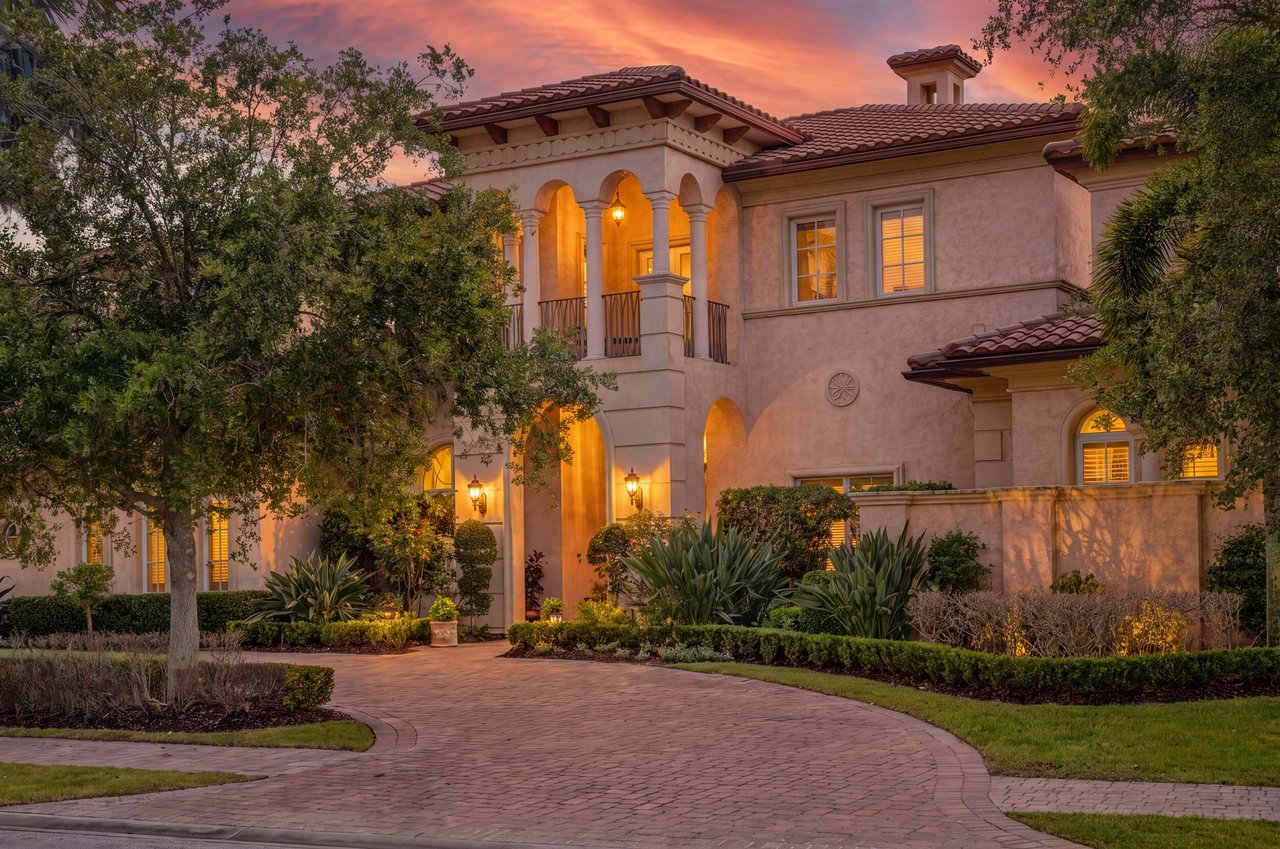
Why Are So Many Jupiter Homes Reducing Their Prices? Updated for Fall 2026
If you have been watching Jupiter real estate lately, you have probably noticed quite a few price reductions.
The main reason is fairly simple. A lot of homes started too high for the market we are in today.
Sellers are often looking at what a neighbor sold for, what their home might have been worth in a stronger market, or simply the number they would like to get. All of that is understandable, but buyers are looking at something different. They are looking at what their money can buy right now.
That is where I see the disconnect happening.
We can launch a property with strong marketing, reach the right buyer, generate plenty of showings and still not receive an offer. When that happens, I do not automatically assume we need more marketing.
If qualified buyers are coming through the door and consistently deciding not to write an offer, I start looking very closely at price.
Why are Jupiter homes reducing their prices?
In many cases, the starting price was simply too ambitious for the current competitive landscape.
I completely understand why sellers want to try the higher number. Nobody wants to sell their home and wonder whether they could have gotten more.
The common thought is, "Let's try it. We can always come down."
Technically, yes. But there is a cost to testing the market, especially when buyers have enough inventory to be selective.
A Jupiter buyer shopping around $1.5 million is not only thinking about what your neighbor sold for six months ago. They are looking at everything else they can buy around $1.5 million right now.
That is the competition that matters.
So when I am pricing a Jupiter home, I absolutely want to understand the recent closed sales. But I also want to know exactly what the buyer will see when your home hits the market.
Does a price reduction mean a Jupiter home lost value?
Not necessarily.
This is an important distinction because a price reduction can look much more dramatic online than it actually is.
The seller chooses the original asking price. That does not mean buyers ever agreed that the home was worth that amount.
The 2026 Jupiter market statistics give us a good example of why this matters.
One Jupiter River Estate single-family home was listed at $1.9 million and ultimately closed at $1.825 million. In that case, the original asking price stayed relatively close to where a buyer ultimately saw the value.
Then there is the Canterbury Place example. That Jupiter single-family home started at $1.275 million, was later priced at $996,000, and ultimately closed at $970,000.
I would not look at that second example and simply say, "The house lost $305,000."
That misses the more important question.
Was the original $1.275 million asking price ever supported by the market in the first place?
That is the difference between list price and market value, and it is an important distinction when you are looking at all of the price reductions showing up in Jupiter right now.
What does it mean when you are getting showings but no offers?
This is one of the clearest signals I pay attention to.
If a home is barely getting shown, I want to look at the whole picture. The price could be wrong, but the presentation, photography, access or marketing could also be contributing to the problem.
It is different when we have a steady stream of buyers coming through.
At that point, the marketing is doing its job. We reached the buyer. The home was appealing enough for them to make an appointment and see it in person.
If that happens over and over again and nobody is making an offer, the conversation has to come back to value.
That does not mean something is wrong with the house. It may simply mean buyers like the home, but they do not like it enough at the current price.
I would rather use that feedback than fight it.
The type of activity we are getting also helps me understand where the disconnect might be. If there are very few inquiries or showings, I am looking at price, presentation, positioning and marketing together. If buyers are viewing the property online but not taking the next step to see it, they may not see enough value to make the appointment.
When we are getting plenty of showings but no offers, price moves much higher on my list of concerns.
I also pay close attention to what buyers are choosing instead. If other comparable Jupiter homes are going under contract while ours remains available, I want to know why. Sometimes the answer is condition. Sometimes it is location or a specific feature. Very often, it comes back to the relationship between the house and the price.
There is no exact formula for this, but buyer behavior gives us real information. When the same message keeps coming back, I think sellers are better served by listening to it.
What do the 2026 Jupiter market statistics tell us?
The 2026 Jupiter market statistics show how different the path to a sale can be from one property to another.
Some properties came to market fairly close to where buyers ultimately saw value.
The Jupiter River Estate home I mentioned above was listed at $1.9 million and closed at $1.825 million. Another home in Valencia at Abacoa was listed at $1.1 million and closed at $1.075 million. In both cases, the gap between the original asking price and the final sale price was relatively small.
Then you have the Canterbury Place property, which started at $1.275 million, was later priced below $1 million and ultimately closed at $970,000.
I think those examples are more useful side by side than simply counting price reductions.
They show what can happen when a home starts relatively close to the number buyers are willing to support compared with what can happen when the initial price and the current market are much farther apart.
And that is really the point.
I do not look at these market statistics and conclude that "Jupiter home prices are falling." That is far too broad a statement to make from individual sales.
What I do see is a market that is less forgiving of aggressive pricing.
If a property comes out at a price buyers can justify against everything else available to them, the path to a sale can look very different from a property that spends its first few weeks trying to prove a number the market does not support.
That lines up very closely with what I am seeing firsthand.
Why does current competition matter so much?
One of the easiest mistakes for a seller to make is looking at their home in isolation.
Buyers do not shop that way.
A seller may tell me, "My neighbor sold for $1.6 million," and of course I want to look at that sale. It is relevant.
But I also want to know what someone with approximately $1.6 million can buy in Jupiter today.
Maybe another home has a newer kitchen, while yours has the better lot. Maybe your property has a stronger view, but the competing home has been completely renovated. One community may have higher recurring costs than another. A competing property may have already reduced its price.
Those differences matter because the buyer is weighing all of them at once.
Closed sales show us what buyers have already paid. Current Jupiter housing inventory shows us what your buyer has to choose from today.
I want both before I recommend a price.
This is also why pricing cannot be reduced to simply finding the highest recent sale in the neighborhood and working backward from there.
The buyer standing in your kitchen this week is not deciding between your home and something that sold six months ago. They are deciding between your home and the other properties they can actually purchase today.
What is the downside of listing too high?
The biggest issue is not simply that you may have to reduce later. It is what happens before you get to that reduction.
The first days and weeks of a listing are valuable because the property is new. Buyers who have been watching the market notice it. Agents notice it. Saved searches go out. Your marketing is reaching people who may have been waiting for exactly that type of property.
If those buyers come through and decide the price is too high, many of them move on.
You can lower the price later, but you cannot completely recreate the first impression of a brand-new listing.
There is also the issue of days on market. As a property sits, buyers naturally start wondering why it has not sold. They may start thinking the seller will negotiate more aggressively or wondering whether other buyers saw something they did not.
There may be absolutely nothing wrong with the house, but the psychology changes.
That can change the negotiation too.
This is why I do not love the phrase, "We can always reduce later."
Of course we can.
The question is what we gave up before we got there.
Sometimes testing a higher price makes sense. Sometimes a unique property deserves some room to test the market. I just want a seller to understand that it is a strategy with a tradeoff, not a free experiment.
Should you price low just to get multiple offers?
No.
I am not interested in pricing a Jupiter home low just so we can say we created a bidding war.
I am also not interested in telling a seller the highest possible number simply because it sounds good during a listing appointment.
Neither one is the goal.
The goal is to determine what price gives the property the strongest launch and gives the seller the best opportunity to net the most money.
That is the number I care about.
A higher asking price does not automatically produce a better result.
If a property sits, requires multiple reductions and eventually gives the buyer more negotiating leverage, starting higher may not have helped the seller at all.
I would much rather have that conversation before we launch than explain it after the home has already been sitting on the market.
What should a seller look at before choosing a list price?
I look at quite a bit more than three nearby sales.
Recent comparable sales matter because they show us what buyers have actually paid. But then I want to look at the active competition because that tells us what your buyer can purchase instead of your home right now.
Pending sales are useful too. They help us understand which properties buyers are choosing in the current market, not six months ago.
I also look at price reductions and days on market because they give us clues about where sellers may have started too high and how quickly buyers are responding to similar homes.
Then we have to look at the property itself.
Condition matters. Renovation quality matters. The lot, view, location and floor plan all matter. Community costs matter. Two homes can be close to each other, have similar square footage and still create a very different reaction from a buyer.
And once a home is on the market, the response becomes part of the data.
Showings, feedback and offers tell us things we simply could not know before launch.
This is why an automated home valuation can only take you so far.
It can be a useful starting point, but it does not walk through your competition. It does not understand that one home feels completely renovated while another needs substantial work. It does not see the lot, the light, the view or how the floor plan feels in person.
And it certainly does not hear what buyers are saying after a showing.
If you are trying to understand what your Jupiter home is worth in today's market, I want to combine the historical data with what is actually happening around your home right now.
What should Jupiter buyers think when they see a price reduction?
Do not automatically assume you found a bargain.
A home that drops from $2.2 million to $2 million may look like it suddenly became a great deal.
But if buyers thought it was worth around $2 million all along, that reduction may simply be bringing the asking price closer to where the market already was.
Some price-reduced Jupiter homes become very compelling opportunities.
Others are still overpriced after the first reduction.
The price-drop notice on a real estate website does not answer the value question for you.
You still have to look at the home, the comparable sales and everything else you could purchase for similar money.
How should a Jupiter seller choose a list price right now?
I would start by changing the question.
Instead of asking, "What is the highest price we can list at?"
I would ask, "What price gives us the strongest launch and the best chance of netting you the most money?"
Those can be two very different conversations.
There are properties where I believe we have room to push the number. There are others where the smartest strategy is to be more disciplined from the beginning.
It depends on the house, the competing inventory and what buyers are actually doing.
That is the part of pricing that cannot be reduced to an online estimate.
Frequently Asked Questions About Jupiter Home Price Reductions
Why is my Jupiter home getting showings but no offers?
If your home is getting consistent showings but buyers are not writing offers, I would look very closely at price. The marketing is getting them through the door. The question becomes whether they see enough value at the current asking price to act.
Does a price reduction make a seller look desperate?
No. A seller may simply be responding intelligently to market feedback. There is a big difference between adjusting a price because the market gave you new information and making a distressed sale.
How soon should I reduce my price?
I do not use an automatic number of days. I want to look at showing activity, buyer feedback, competing inventory, new pending sales and whether comparable homes are selling while yours remains available.
Should I list high so I have room to negotiate?
Reasonable negotiating room can make sense. The problem is pricing so far above the market that buyers do not engage in the first place.
You cannot negotiate with someone who never makes an offer.
Can a price reduction help a home sell?
Absolutely. If the new price puts the home into a range where buyers see stronger value, a reduction can bring the listing back into consideration.
Do price reductions mean Jupiter real estate is crashing?
No. Price reductions and falling home values are not the same thing.
The 2026 Jupiter market statistics include properties that sold relatively close to their original asking prices as well as properties that needed much larger adjustments. To evaluate Jupiter home values, we need to look at actual closed sales and broader market conditions, not simply the number of listings with a price change.
How do I know what price will net me the most?
That takes more than pulling a few comparable sales.
I want to look at recent closings, active competition, pending properties, price reductions, days on market, buyer behavior and the details of your specific home.
Then we can make a pricing decision based on the outcome you are actually trying to achieve.
The list price is not the result
This is probably the simplest way I can explain it.
A seller can feel great about a high list price on day one, but the list price is not the result.
The result is what happens when the home sells and what the seller actually nets at closing.
When I am pricing a home in Jupiter, I want to understand where it fits in today's market, what buyers will compare it against and what strategy gives the seller the strongest opportunity to get the best outcome.
If you are considering selling, my Jupiter Market + Home Value Review is designed around exactly that question.
We look at your property, recent Jupiter sales, current competition and buyer behavior to determine what pricing strategy is most likely to give you the strongest launch and the best potential net result.
About Katie Lucie
Katie Lucie is a top producing Jupiter, Florida real estate advisor. She focuses on helping homeowners understand Jupiter home values, pricing strategy, current market conditions and how to position a property for sale using local market statistics and firsthand buyer behavior.
Her approach to Jupiter and Palm Beach County real estate is evidence-first. Rather than relying on an automated home value or a single neighborhood sale, Katie looks at recent closed sales, current competing homes, pending activity, price reductions and what buyers are actually responding to in the market.
For Jupiter homeowners thinking about selling, that analysis is designed to answer the questions that matter most: What is my Jupiter home worth today? What price will create the strongest launch? And what pricing strategy gives me the best opportunity to net the most from my sale?